
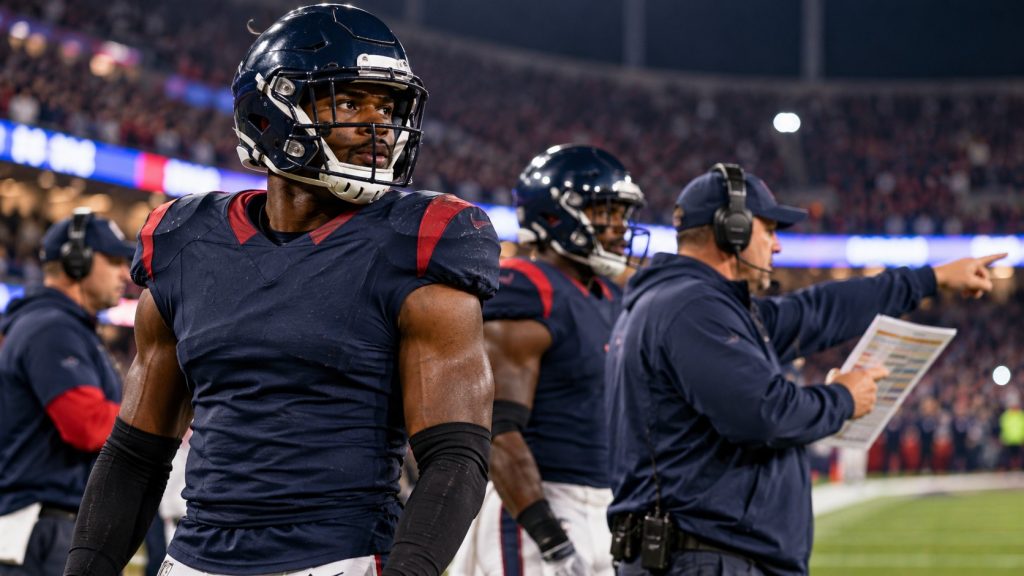
October 25, 2026 — The NFL trade deadline is approaching, and defensive roster decisions are becoming an increasingly important storyline across the league. With the deadline set for November 10 at 4 p.m. ET, teams must decide whether established defenders still fit their plans, whether younger players deserve larger roles, and whether veteran talent could bring valuable draft compensation.
The discussion is not simply about declining production. In some cases, a defensive player can remain talented but become less valuable to his current team because of a changing scheme, increased competition for snaps, contract considerations, or a shift toward rebuilding. That combination is putting several recognizable names under the spotlight as front offices evaluate their options.
No trade is guaranteed for any of these players. However, recent reporting has identified several defensive standouts and rotational contributors whose situations illustrate how quickly personnel priorities can change during an NFL season.
Will McDonald IV Faces a Crowded Defensive End Rotation
The New York Jets’ Will McDonald IV is one of the clearest examples of how a changing depth chart can create trade speculation. New York added first-round edge rusher David Bailey and veteran pass rushers Kingsley Enagbare and Joseph Ossai, increasing competition for opportunities along the defensive front.
McDonald’s role has subsequently become a significant point of discussion. Fox Sports identified him as a potential trade candidate in its October 21 deadline analysis, noting that he had played more than 50% of the Jets’ defensive snaps in just one game this season. Separate reporting has also indicated that other teams could inquire about his availability, although no completed deal has been reported.
The situation presents a decision for New York. McDonald still has potential value as a pass rusher, and his contract situation gives the team options beyond a short-term rental. Keeping him would preserve defensive depth, while trading him could provide draft capital if the coaching staff believes its newer additions offer a better fit.
That distinction matters. A reduced role does not automatically mean a player has failed. It can also reflect a coaching staff’s preference for different personnel combinations, a new approach to generating pressure, or the emergence of a younger defender.
Kayvon Thibodeaux’s Future Depends on the Giants’ Priorities
The New York Giants have another difficult decision involving edge rusher Kayvon Thibodeaux. The former first-round pick recorded 11.5 sacks in 2023, but his production has fallen short of that mark in subsequent seasons. Fox Sports reported on October 21 that he had gone without a sack in his previous 11 games.
For a pass rusher, that kind of stretch can raise questions about consistency, deployment, and overall effectiveness. Teams looking for an immediate boost could still be interested in Thibodeaux because of his athletic ability and experience, particularly if they believe a different defensive system could help him regain his previous form.
However, the Giants have a compelling reason to hesitate. Brian Burns’ season-ending injury makes the team’s edge-rushing depth more important, not less. Trading Thibodeaux could create a new roster problem just as the defense needs additional help generating pressure.
His future therefore depends on more than the number of sacks he records. New York must weigh his remaining potential and contract situation against its immediate need for reliable pass rushers. Unless the return is attractive enough, keeping him could make more sense than moving a valuable defensive option.
Khalil Mack Is a Potential Trade Target, but the Chargers Have Reasons to Keep Him
Los Angeles Chargers linebacker and edge rusher Khalil Mack has also attracted deadline attention following the team’s difficult start. The Chargers entered their Week 7 bye at 0-6 after a 22-6 loss to the Kansas City Chiefs on October 18. Their record has fueled questions about whether the organization should prioritize its longer-term roster plans over its immediate playoff ambitions.
Mack remains a recognizable veteran with a substantial track record of disrupting opposing quarterbacks. He recorded three sacks through the Chargers’ first six games, according to reporting and statistical information available before the deadline discussions intensified.
His contract makes the situation especially relevant. Mack returned to Los Angeles on a one-year, $18 million deal, creating the possibility of a short-term acquisition for a contender searching for experienced pass-rush help. A team pursuing a postseason run could value his ability to pressure quarterbacks without committing to a long-term contract.
Still, a trade is far from inevitable. Mack publicly expressed his belief in the Chargers and said he remained focused on winning with the organization. His leadership also remains important to the defense, particularly as younger players develop.
For Los Angeles, the decision comes down to whether the value of a potential draft pick outweighs the benefits of keeping an experienced defensive leader. A disappointing record can make veterans attractive trade candidates, but it does not mean every established player should be moved.
Daron Payne Could Become a Valuable Defensive Line Trade Chip
Washington Commanders defensive tackle Daron Payne is another name to watch as the deadline approaches. Payne established himself as a disruptive interior defender with an 11.5-sack season in 2022, but his sack production has declined since that breakout campaign.
Fox Sports identified Payne as Washington’s leading trade candidate in its October 21 analysis. His contract situation is a major consideration: the four-year, $90 million agreement he signed in 2022 is approaching its conclusion, making the deadline an opportunity for Washington to consider whether it can obtain meaningful value before his next contract decision.
Payne’s appeal extends beyond sacks. Interior defensive linemen who can occupy blockers, disrupt running plays, and create pressure through the middle are valuable to teams preparing for the postseason. Even when a defender is no longer producing at his career-best level, those responsibilities can remain important.
The Commanders must also consider their own competitive position. A team that believes it can recover and remain in contention may prefer to retain a proven starter. If its outlook deteriorates, however, draft compensation could become more attractive than keeping a veteran whose contract situation is approaching a decision point.
For potential buyers, Payne could represent an opportunity to strengthen the defensive front without relying exclusively on an edge rusher. For Washington, the question is whether a trade offer adequately reflects his remaining value and importance to the defense.
Sheldon Rankins Shows How a Young Player Can Change the Equation
Houston Texans defensive tackle Sheldon Rankins offers another example of how a changing depth chart can affect an established defender’s future. The 32-year-old veteran remains a starting-caliber interior player, but the emergence of rookie defensive tackle Kayden McDonald has created a reason to reassess the distribution of defensive snaps.
Fox Sports reported that Rankins’ playing time had decreased in the two games McDonald played after returning from injured reserve. Moving Rankins could give the rookie additional opportunities while potentially bringing Houston draft compensation or creating more flexibility in its defensive rotation.
The decision is not straightforward, however. Rankins signed a two-year extension during the offseason, meaning Houston would need to assess the financial implications and the value of losing an experienced contributor. A younger player earning more snaps does not necessarily mean the veteran has become expendable.
For teams exploring the trade market, Rankins could offer an experienced presence inside the defensive line. For Houston, retaining him would provide depth and stability, while a trade could accelerate the development of a younger defensive tackle. The best option depends on how the coaching staff views its immediate needs and the long-term construction of the roster.
Why Defensive Scheme Fit Matters Before the Trade Deadline
These situations highlight a broader NFL personnel challenge: talent and fit are not always the same thing. A defender who excels in one role may be less effective when asked to perform a different assignment. An edge rusher accustomed to attacking the quarterback may struggle to maximize his strengths when required to handle more coverage responsibilities or maintain a different leverage against the run.
Defensive coordinators also have to balance their preferred personnel with the realities of the roster. A team that relies on frequent substitutions may value depth across multiple positions, while another may prefer a smaller group of defenders who can remain on the field in a variety of situations. A young player’s development can therefore reduce a veteran’s opportunities even without a dramatic decline in ability.
Scheme fit is only one part of the calculation. Contract length, remaining guarantees, injury concerns, salary-cap flexibility, draft-pick value, and a team’s position in the standings all influence whether a trade makes sense. Front offices must also consider the disruption that a midseason departure can cause to communication, defensive assignments, and leadership within the locker room.
That is why a player appearing on a trade-candidate list should not automatically be considered unwanted. These lists represent potential scenarios, not confirmation that a team has decided to move a player or received an acceptable offer.
What to Watch Before November 10
The next two weeks should help clarify which teams intend to pursue a playoff push and which could begin prioritizing future roster flexibility. Teams seeking defensive help will evaluate both proven veterans and younger players whose current roles do not fully match their potential.
For the Jets, McDonald’s snap share and place in the pass-rush rotation remain important indicators. The Giants must balance Thibodeaux’s uncertain production against their need for defensive depth. The Chargers have to decide whether Mack’s leadership and pass-rushing ability are more valuable than a potential trade return, while Washington must weigh Payne’s defensive contributions against the possibility of acquiring draft assets before his contract situation changes.
Houston faces a different question: whether Rankins’ experience remains essential as McDonald develops into a larger role. Each decision will depend on the offers available, the coaching staff’s assessment, and how the team’s competitive position evolves.
The NFL trade deadline arrives on Tuesday, November 10, at 4 p.m. ET. Until then, roster changes remain possible, but speculation should not be confused with confirmed movement. The defining factor will be whether a team believes its established defensive personnel still provide the best combination of production, scheme fit, financial value, and future potential.
In a league where even small improvements along the defensive front can influence a postseason run, the most consequential deadline decisions may involve players whose value has not disappeared but whose place in their current team’s plans has become less certain.
Discussion
0Be the first to share your thoughts on this story.