
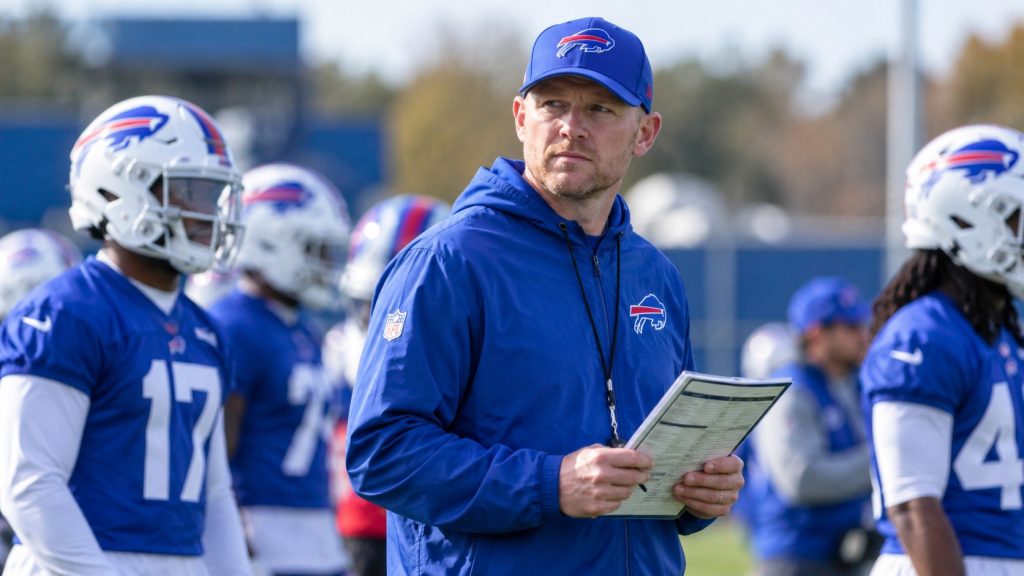
The Buffalo Bills enter their Week 7 bye at 5-1, but their recent performances have raised questions that go beyond the win-loss column. Head coach Joe Brady has guided Buffalo through a strong start to the 2026 NFL season, yet disciplinary concerns, defensive inconsistency and a narrow victory over the Las Vegas Raiders have given the coaching staff important issues to examine during the break.
Buffalo secured a 33-30 victory over Las Vegas on October 18, completing a successful two-game West Coast trip after its 37-34 win over the Los Angeles Rams. The results kept the Bills among the AFC’s leading teams, but neither game was without complications. As Brady prepares his team for the second half of the regular season, the bye week offers an opportunity to determine whether those problems are isolated incidents or signs of issues that require a more substantial response.
The most immediate concern involves discipline. Safety C.J. Gardner-Johnson was ejected during the first half against the Raiders after an unsportsmanlike conduct incident involving spitting toward an opponent. The NFL subsequently suspended him for one game without pay. He has the right to appeal the decision, but unless it is overturned, he is set to miss Buffalo’s November 1 matchup against the Baltimore Ravens.
The incident carried consequences beyond the loss of a defensive player. Gardner-Johnson’s penalty helped give Las Vegas an opportunity to tie the score at 13-13 before halftime. In a contest ultimately decided by three points, that sequence provided a reminder of how individual decisions can affect the entire team.
Brady addressed the situation directly when speaking to reporters on October 19. He called Gardner-Johnson’s behavior inexcusable and said it was not the standard the Bills intended to uphold. The coach also confirmed that the issue had been addressed through private conversations and a team meeting. Buffalo does not plan to impose additional punishment beyond the NFL’s suspension.
For a first-year head coach, the response is an important early test of accountability. A successful team culture is not defined by avoiding every mistake. It depends on how players and coaches respond when expectations are not met, whether standards are applied consistently and whether similar incidents are prevented from becoming recurring problems.
Why the bye week matters for Joe Brady
The Bills have already demonstrated resilience. Their 29-26 loss to the New England Patriots on October 4 ended a three-game winning streak to begin the season, but Buffalo responded with consecutive victories against the Rams and Raiders. The offense has continued to produce, and quarterback Josh Allen remains central to the team’s ability to recover from difficult situations.
Allen threw for 255 yards and two touchdowns against Las Vegas, while running back James Cook added 95 rushing yards and a touchdown. Buffalo also benefited from timely defensive plays, including an interception by linebacker Dorian Williams and a late stop that helped protect the lead.
Those positives matter because they show that the Bills have not lost their ability to execute under pressure. However, repeatedly needing late-game plays to secure victories can become a problem against stronger opponents, particularly when defensive breakdowns give opposing offenses opportunities to remain within striking distance.
Buffalo allowed 34 points to the Rams and 30 to the Raiders in consecutive games. Both contests ended in victories, but the defensive results left room for improvement. The Raiders also moved the ball effectively on important downs, making it difficult for Buffalo to put the game away before the closing minutes.
That distinction is important when assessing whether Brady is facing a culture problem. Poor defensive execution does not automatically indicate a breakdown in team culture, and one player’s disciplinary incident cannot establish that the locker room has a widespread accountability issue. Coaching decisions, communication, player availability and execution can all contribute to the same on-field symptoms.
Brady’s challenge is to identify which problems are connected and which require separate solutions. The bye-week evaluation should include the defense’s tackling and coverage, situational discipline, penalty management and the team’s ability to maintain composure when games become physical and emotionally charged.
The Ravens game will provide an early test
Buffalo returns from its bye to host the Baltimore Ravens on Sunday, November 1. The matchup provides a valuable test of whether the Bills can convert their midseason review into more consistent football. It will also require the coaching staff to account for Gardner-Johnson’s potential absence while preparing for Baltimore’s offense.
The coming week should therefore be about more than reviewing game film or giving players time to recover. Brady and his staff need to establish clear priorities, reinforce expectations and determine how to reduce the mistakes that have made recent victories more difficult than necessary.
There are reasons for optimism. Buffalo is 5-1, has won back-to-back road games and has shown that it can respond to adversity. The team’s recent results do not support a definitive conclusion that its culture is broken. Nevertheless, its disciplinary incident and defensive struggles make the bye week an important opportunity to address weaknesses before the schedule becomes more demanding.
Ultimately, the question is not whether Joe Brady has a culture crisis in Buffalo. The more relevant question is whether he can ensure that individual accountability, disciplined play and reliable execution become consistent habits rather than principles that need to be revisited after each difficult game. The Bills have given their new head coach a strong foundation. How they respond after the bye will help determine whether that foundation is strong enough for a sustained postseason run.
Discussion
0Be the first to share your thoughts on this story.