
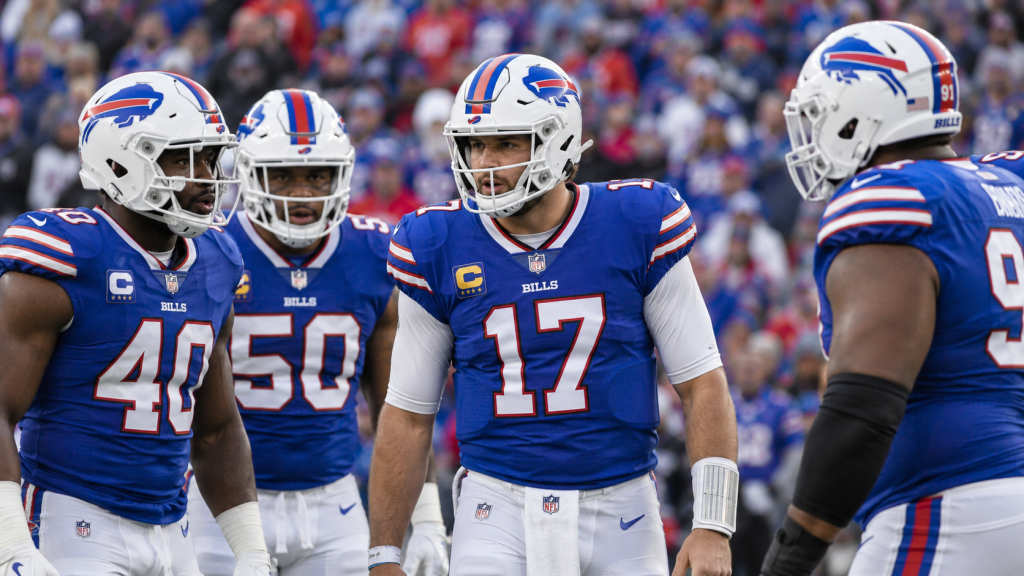
The Buffalo Bills have a 5–1 record, sit atop the AFC East and possess one of the NFL’s most productive offenses. Quarterback Josh Allen continues to lead an attack capable of outscoring almost any opponent. However, beneath Buffalo’s impressive start to the 2026 season, a major concern is becoming increasingly difficult to ignore: the defense is struggling to get consistent stops.
Through six games, Buffalo has allowed 171 points, an average of 28.5 per contest. The defense ranks 28th in points allowed and near the bottom of the league in total defensive yardage. Although the Bills keep finding ways to win, their defensive problems could become a serious obstacle when the competition gets tougher in the postseason.
The Bills’ Winning Record Is Masking a Significant Defensive Problem
Buffalo’s early results tell two very different stories. The offense has delivered enough production to keep the team near the top of the AFC, but the defense has repeatedly given opposing offenses opportunities to stay in games.
The Bills opened the season with a 36–31 victory over the Houston Texans before defeating the Detroit Lions 41–31. They followed those high-scoring wins with a more controlled 24–16 victory over the Los Angeles Chargers. Since then, however, their games have continued to expose defensive inconsistencies.
Buffalo lost 29–26 to the New England Patriots in Week 4, edged the Los Angeles Rams 37–34 in overtime and survived a 33–30 matchup against the Las Vegas Raiders in Week 6. The Bills have allowed at least 29 points in five of their six games.
Those results help explain why the 5–1 record does not tell the entire story. Buffalo has demonstrated an ability to win close games, but repeatedly allowing opponents to reach the high 20s or 30s leaves little room for offensive mistakes, turnovers or a poor performance from Allen.
Josh Allen’s Offense Is Carrying an Enormous Burden
The most encouraging part of Buffalo’s season has been its ability to score. The Bills have produced 197 points through six games, averaging 32.8 points per contest and leading the NFL in scoring entering their Week 7 bye.
Allen has been central to that success, combining his passing ability with the threat of running the football. Running back James Cook has also helped keep the offense productive, while Buffalo has received important contributions from its receiving group, including Keon Coleman and Khalil Shakir.
The offense has shown that it can respond when games become uncomfortable. Against the Raiders on October 18, Allen threw for 255 yards and two touchdowns, while Cook finished with 95 rushing yards and a score. Buffalo eventually secured a 33–30 win.
However, the offensive production also highlights the defense’s limitations. When a team must regularly score 30 or more points to remain comfortable, the margin for error becomes dangerously small. Allen can produce game-changing plays, but expecting him and the offense to rescue the team every week is not a sustainable championship strategy.
Passing Defense and Third-Down Stops Are Major Concerns
Buffalo’s struggles extend beyond the final score. Through the first six weeks, the defense has surrendered 15 passing touchdowns, the second-highest total in the league according to reporting published during the bye week. Opposing quarterbacks have repeatedly found opportunities to attack the secondary and extend drives.
Third-down defense is another problem that requires immediate attention. Opponents have converted approximately 45% of their third-down attempts against Buffalo, one of the league’s weakest rates. When defenses fail to get off the field on third down, they allow opponents to maintain possession, create more scoring opportunities and place additional pressure on the offense.
The problem was visible against the Raiders. Las Vegas finished with 378 total yards, including 313 passing yards, and converted seven of 12 third-down opportunities. Although Buffalo produced important defensive plays during the game, the Raiders remained within striking distance until the final moments.
Buffalo also surrendered seven third-down conversions on 14 attempts against the Rams in Week 5. These performances illustrate why the defense must improve its consistency rather than relying on occasional stops to compensate for longer stretches of ineffective play.
Jim Leonhard Faces an Important Test During the Bye Week
Defensive coordinator Jim Leonhard has inherited a unit undergoing a significant tactical transition. Under the new coaching structure, Buffalo has moved away from its previous 4–3 defensive approach toward a multiple 3–4 system.
Changing defensive personnel responsibilities, coverage assignments and pressure packages can take time. However, the early-season results show that the adjustment period has come with significant costs, particularly against the pass and on third down.
The defense has shown flashes of promise. Defensive tackle Deone Walker has provided disruptive interior play, while edge rusher Greg Rousseau has contributed to the pass rush. Buffalo also produced an interception against Las Vegas and made a valuable short-yardage stop during the game.
Those positive moments suggest that the unit is not without talent. The challenge is turning individual performances into reliable, four-quarter execution. Leonhard must find ways to improve communication in the secondary, limit explosive passing plays and create more predictable third-down situations for opposing offenses.
The Secondary Faces Another Challenge Before the Ravens Game
Buffalo’s defensive backfield has become an area of particular concern. Coverage breakdowns and missed opportunities to end drives have allowed opposing offenses to remain competitive, even when the Bills build an advantage.
Safety C.J. Gardner-Johnson’s one-game suspension was upheld on appeal on October 22, making him ineligible for Buffalo’s Week 8 matchup against the Baltimore Ravens. His absence creates an additional personnel challenge for a secondary already under pressure.
The upcoming game against Baltimore will provide an important opportunity to evaluate whether the Bills have used their bye week effectively. Buffalo needs a coordinated defensive performance, particularly in coverage and on money downs, rather than another contest decided by the offense making one final play.
Can the Bills Still Make a Super Bowl Run?
Buffalo’s 5–1 start keeps the team firmly in the AFC conversation, and its scoring ability gives it a genuine foundation for a playoff run. There is no reason to dismiss the Bills’ championship ambitions solely because of six games of defensive inconsistency.
Nevertheless, the current numbers identify a problem that cannot be ignored. Against stronger postseason opponents, an offense may not always have enough possessions or opportunities to compensate for repeated defensive breakdowns. A few failed third-down stops, missed coverage assignments or late-game touchdowns could be enough to decide an elimination game.
The Bills must therefore use the bye week to address the causes of their defensive struggles, not simply celebrate their position in the standings. Better communication, more reliable coverage and improved third-down execution would give the offense greater margin for error.
Buffalo returns to action on November 1, when it hosts the Ravens at Highmark Stadium. That matchup will be an early measure of whether the coaching staff has made meaningful progress.
The Bills remain a dangerous team because of Allen and their high-powered offense. But their 5–1 record should not obscure the bigger picture: if the defense continues to allow points at its current rate, Buffalo’s Super Bowl hopes could be threatened long before the postseason reaches its decisive stages.
Discussion
0Be the first to share your thoughts on this story.