
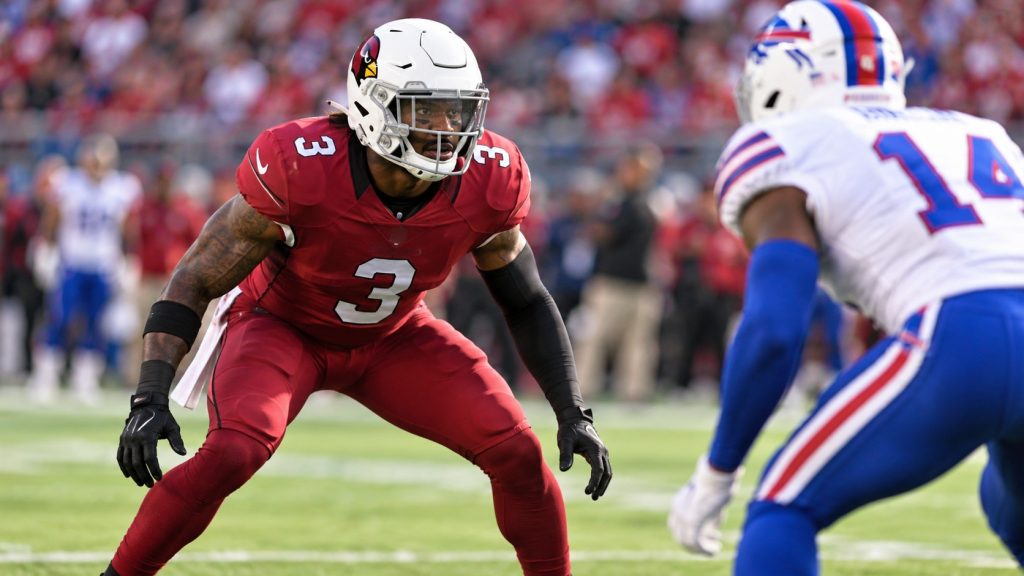
The Buffalo Bills have a compelling reason to explore the trade market before the NFL deadline: their defensive secondary needs help, and Arizona Cardinals safety Budda Baker could offer the experience, versatility, and playmaking ability they are missing. With the November 10, 2026, trade deadline approaching, Baker is an intriguing potential target for general manager Brandon Beane as Buffalo looks to strengthen its defense for the second half of the season.
However, there is an important distinction between a sensible trade target and an imminent transaction. As of October 27, there has been no confirmed announcement that the Cardinals are trading Baker or that the Bills have submitted an offer. The idea remains a speculative roster-building scenario, but the football and financial factors make it worth examining.
Buffalo’s defensive struggles have provided a strong argument for considering a move. NFL.com’s 2026 passing-defense statistics show that the Bills have allowed 1,792 passing yards and 15 passing touchdowns against three interceptions through six games. Those numbers highlight the need for better coverage, more effective communication, and additional playmaking in the defensive backfield.
The problems have not been limited to one position. Buffalo’s young cornerbacks have faced growing pains, while injuries have affected the defensive backfield at important moments. Adding an established safety would not solve every coverage issue, but a veteran who can communicate assignments, support the run defense, and make plays around the football could help stabilize the unit.
Why Budda Baker Makes Sense for Buffalo
Baker has built his reputation as one of the NFL’s most energetic and versatile defensive backs. The eight-time Pro Bowler brings extensive experience to a defense that could benefit from a more established presence in the secondary. His ability to play aggressively near the line of scrimmage, pursue ball carriers, and contribute as a blitzer gives a defensive coordinator several options when designing a game plan.
His 2026 production reinforces that value. Through seven games, Baker has recorded 44 combined tackles, 3.5 sacks, and one interception. Those numbers demonstrate his involvement in multiple areas of the defense rather than a role limited to conventional deep coverage.
For Buffalo, Baker could become an important part of the communication structure in the secondary. An experienced safety can help organize coverage responsibilities, recognize offensive formations, and respond when opponents attempt to exploit inexperienced cornerbacks. His physical style could also provide additional support against running backs and tight ends working into the middle of the field.
His arrival would not automatically turn the Bills into an elite pass defense. Cornerback play, pass-rush pressure, tackling, and coaching adjustments would remain important. Baker would be most valuable as a significant reinforcement to the existing unit, not as a substitute for fixing every defensive weakness.
The $54 Million Contract Is the Biggest Question
Money is the central consideration in any potential deal. Baker signed a three-year contract extension worth $54 million with the Cardinals in December 2024. The agreement runs through the 2027 season, meaning a team acquiring him would need to evaluate the remaining contract rather than treat him as a short-term rental without future commitments.
Over The Cap lists Baker’s 2026 salary-cap charge at approximately $19.22 million and his 2027 cap charge at approximately $20.89 million. Those figures make him an expensive option, even for a team with serious postseason ambitions.
The distinction matters because the $54 million figure is the overall value of his extension, not the price Buffalo would pay Arizona in draft compensation. A trade would involve two separate financial decisions: negotiating the compensation owed to the Cardinals and determining how Baker’s remaining contract would fit within Buffalo’s salary-cap plans.
Beane would therefore need to evaluate the full cost before making an aggressive offer. The Bills should consider the immediate defensive improvement alongside their available cap space, future roster commitments, and the draft capital required to complete the transaction.
Would Arizona Be Willing to Trade Its Defensive Leader?
Arizona’s direction has added another layer to the discussion. On October 12, the Cardinals traded wide receiver Marvin Harrison Jr. to the Houston Texans in a deal involving future draft picks. That transaction has encouraged speculation about the Cardinals’ longer-term roster plans, but it does not establish that Baker is available or that the organization intends to move him.
Baker remains an experienced defensive leader, and Arizona would have to decide whether the draft compensation offered by Buffalo justifies losing one of its most established players. The Cardinals would also need to consider the effect of removing his experience from a secondary that relies on his leadership and versatility.
His recent health is another factor. Baker was active against the Denver Broncos on October 25 after dealing with a groin issue and an illness. Any interested team would need to review his medical status and determine whether he could immediately handle the responsibilities expected of him for the remainder of the season.
What the Bills Should Do Before the Trade Deadline
Buffalo should investigate the possibility without assuming that Baker is automatically the right answer at any price. The first step would be establishing whether Arizona is willing to discuss a trade. The Bills could then compare the asking price, remaining contract obligations, and expected on-field contribution against other available defensive backs.
The team should also avoid overlooking its cornerback needs. Baker could strengthen the safety position and improve communication across the defense, but he cannot independently eliminate coverage breakdowns on the outside. A balanced plan would address the specific problems behind Buffalo’s passing-defense numbers rather than concentrate all available resources on a single player.
Draft compensation should remain a major consideration. Buffalo has reasons to be aggressive while its championship ambitions remain relevant, but surrendering valuable future picks for a veteran carries risks. The appropriate offer would depend on Arizona’s willingness to negotiate, Baker’s medical evaluation, and the financial structure of a potential deal.
The NFL trade deadline is November 10, leaving the Bills time to assess their options. If the Cardinals make Baker available at a manageable price, Buffalo would have a credible football case for pursuing him. If the asking price becomes excessive, the organization should be prepared to consider alternative safeties or cornerbacks instead.
The verdict: Budda Baker could be a major addition to the Buffalo Bills’ secondary, and his experience makes him a legitimate player to investigate before the deadline. But the $54 million contract, his age, recent injury concerns, and the draft compensation involved mean that calling a trade a must-do would be premature. The smart move for Buffalo is to pursue the opportunity seriously, establish a firm price limit, and make the deal only if the defensive improvement justifies the cost.
Discussion
0Be the first to share your thoughts on this story.