
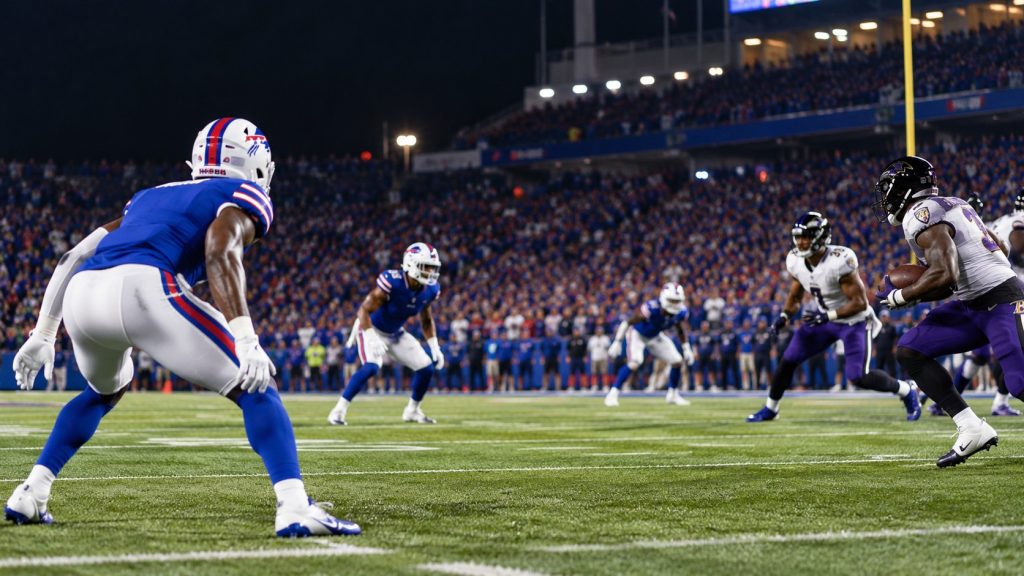
The Buffalo Bills are entering a pivotal stretch of the 2026 NFL season with a 5-1 record, but questions surrounding their defense are becoming increasingly difficult to ignore. With a Week 8 matchup against the Baltimore Ravens approaching, Buffalo must determine whether its current secondary has enough depth to handle one of the AFC’s most challenging offensive teams.
The immediate concern is the absence of safety C.J. Gardner-Johnson, whose one-game suspension was upheld following an appeal. The veteran defensive back will miss Buffalo’s November 1 meeting with Baltimore after being ejected during the Bills’ 33-30 victory over the Las Vegas Raiders on October 18 for an unsportsmanlike conduct incident involving spitting toward an opponent.
Gardner-Johnson is expected to be eligible to return for Buffalo’s November 9 road game against the Minnesota Vikings. His suspension does not mean the Bills are moving on from him, and there has been no confirmed announcement of a trade to replace him. However, the timing has intensified the debate over whether general manager Brandon Beane should pursue additional defensive help before the NFL trade deadline.
Why Gardner-Johnson’s Absence Matters Against Baltimore
Replacing a starting safety involves more than filling a position on the depth chart. Safeties must communicate coverage assignments, recognize offensive formations, provide support against the run and prevent opposing quarterbacks from exploiting defensive mistakes. Losing an experienced player can place additional pressure on the rest of the secondary, particularly against an offense that regularly creates difficult coverage decisions.
The Ravens will visit Buffalo on Sunday, November 1, at 1 p.m. Eastern time at Highmark Stadium. Baltimore enters the matchup with a 4-3 record after consecutive losses to the Cleveland Browns and Cincinnati Bengals. Despite those setbacks, the Ravens remain a dangerous opponent, particularly if quarterback Lamar Jackson is available.
Jackson was listed as a full participant in Thursday’s practice after missing the previous three games with an ankle injury. His final playing status remains important, but Buffalo must prepare for the possibility that the former NFL MVP will return to the lineup.
Jackson’s combination of passing ability, mobility and playmaking instincts can punish defensive breakdowns. If Buffalo’s safeties hesitate when diagnosing a play or fail to communicate correctly, Jackson can exploit the resulting space with either his arm or his legs.
The Bills Have Depth, but the Matchup Will Test It
Buffalo is not without alternatives. Cole Bishop, Damar Hamlin, Jalon Kilgore and Sam Franklin Jr. provide options within the team’s safety group. Franklin is eligible to play against Baltimore after his separate one-game suspension was reduced to a $14,926 fine following an appeal.
Nevertheless, having available players does not automatically eliminate the challenge of replacing an experienced starter. Defensive coordinator Jim Leonhard must determine how to distribute responsibilities, maintain communication and ensure that Baltimore cannot consistently identify favorable matchups.
The challenge extends beyond Jackson. Baltimore can use tight ends such as Mark Andrews to attack the middle of the field, create mismatches against linebackers and safeties, and force defenses to adjust their coverage before the snap. The Ravens also use multiple-tight-end formations, increasing the importance of disciplined run fits and reliable coverage assignments.
Buffalo’s ability to execute those responsibilities could influence the outcome of a game that carries significant implications for its position in the AFC playoff race.
Buffalo’s Defensive Numbers Demand Attention
The Bills’ winning record has helped keep their Super Bowl ambitions alive, but their defensive performance suggests that improvement is necessary. Through their first six games, Buffalo allowed 171 points, an average of 28.5 points per game. That total includes several competitive contests in which the offense had to help protect the team’s chances of winning.
Buffalo has demonstrated that it can score enough points to overcome defensive setbacks. However, relying on shootouts becomes increasingly risky against teams capable of controlling possession, creating explosive plays and taking advantage of mistakes in crucial situations.
The Gardner-Johnson suspension is not the sole explanation for those concerns. Defensive consistency, communication, tackling and the ability to generate pressure all matter. A new safety could strengthen the back end, but no acquisition would automatically fix every problem.
That distinction should guide Beane’s approach. Buffalo needs to identify the weaknesses that are most likely to undermine its postseason ambitions rather than assume that making a trade is a solution in itself.
Which Safety Trade Targets Could Make Sense?
Potential safety acquisitions have become a subject of trade-deadline analysis surrounding the Bills. Tennessee Titans safety Amani Hooker and Indianapolis Colts safety Cam Bynum are among the players discussed in published trade-candidate evaluations. Those names represent potential options, not confirmation that Buffalo has made an offer or entered negotiations.
Hooker offers experience across multiple defensive roles, while Bynum brings a veteran background at safety and experience playing in a full-time defensive role. Either profile could be worth evaluating if Buffalo believes its existing personnel need additional support for the second half of the season.
However, Beane must weigh several factors before pursuing a deal. The acquisition cost, remaining salary obligations, available salary-cap space, contract length and the player’s ability to learn Buffalo’s defensive system quickly should all influence the decision.
The Bills should also avoid sacrificing significant future draft capital for a player whose impact would be limited or whose role overlaps too heavily with the existing roster. The objective should be a meaningful defensive upgrade, not a transaction designed to create headlines.
The Trade Deadline Creates a Narrow Window
The NFL’s 2026 trade deadline is November 10 at 4 p.m. Eastern time. That gives Buffalo a limited window to evaluate potential additions as it prepares for a demanding stretch of the schedule.
Because the Ravens game takes place before the deadline, a trade is not a prerequisite for Buffalo to compete on Sunday. In fact, acquiring a player immediately before the matchup would leave limited time to integrate that player into the defense. The coaching staff must be prepared to manage Gardner-Johnson’s absence with the personnel already available.
The more pressing question is whether Buffalo should use the coming days to strengthen its defense for the remainder of the season. A successful deal could provide additional experience, flexibility and protection against future injuries or inconsistent play. A rushed or expensive transaction, however, could create new problems without addressing the team’s most urgent weaknesses.
Should the Bills Make a Trade Before the Ravens Game?
Buffalo should explore the trade market aggressively, but it must distinguish urgency from panic. Gardner-Johnson’s suspension creates an immediate personnel challenge, while the team’s defensive performance provides a broader reason to examine possible upgrades. Neither issue guarantees that an external addition is the best answer.
For Sunday’s matchup, the Bills need disciplined execution from their available safeties, effective communication across the secondary and a defensive plan that accounts for Jackson’s mobility if he returns. Limiting explosive plays and forcing Baltimore to sustain long drives could be especially important.
Beyond Week 8, Beane should remain open to acquiring a proven defensive back if the price and financial terms make sense. Buffalo’s 5-1 start gives it an opportunity to compete for a strong postseason position, but maintaining that momentum will require more than offensive production alone.
The Gardner-Johnson absence is temporary, yet the questions surrounding Buffalo’s defense extend beyond one player or one game. The Ravens showdown will provide another test of the team’s current depth. The trade deadline, meanwhile, gives the Bills an opportunity to determine whether a carefully selected addition could make the defense more dependable for the remainder of the 2026 campaign.
Discussion
0Be the first to share your thoughts on this story.